
What AI try-on still gets wrong
Generated on-model imagery is reliable for most garments and unreliable in five specific places: hands, text or logos printed on the garment, sheer and lace fabric, complex layering, and anything presented as fit accuracy — which is not a rendering problem at all.
Hands, and everything a hand touches
Hands are the most reported defect and the one shoppers spot fastest. They are small in frame, highly articulated, and appear in an enormous range of configurations, so a model that is excellent at faces will still produce six fingers or a thumb bending the wrong way.
The practical consequence is not that hands are unusable — it is that hands need checking. A batch of two hundred renders will contain a handful of bad ones, and they will not announce themselves in a thumbnail. Anything where a hand overlaps the product, holds it, or rests against it deserves a look at full size before it ships.
- Extra or fused fingers, most visible when the hand is near the face or the garment
- Thumbs at anatomically wrong angles
- Nails that lose their shape at small sizes and reappear wrong when upscaled
- Hands gripping a product — the hardest case, because contact has to look load-bearing
Text and logos on the garment
A generative model treats printed type as texture rather than as typography. It has learned what lettering looks like, not what your brand name spells, so a recognisable mark comes back subtly deformed — a letter melted, a kerning that drifts, a logo that is almost right.
This matters more than it sounds, because 'almost right' is worse than obviously wrong. An obviously mangled logo gets caught in review; one that is off by a single letterform ships, and then it is on a product page representing a brand.
Sheer fabric, lace and mesh
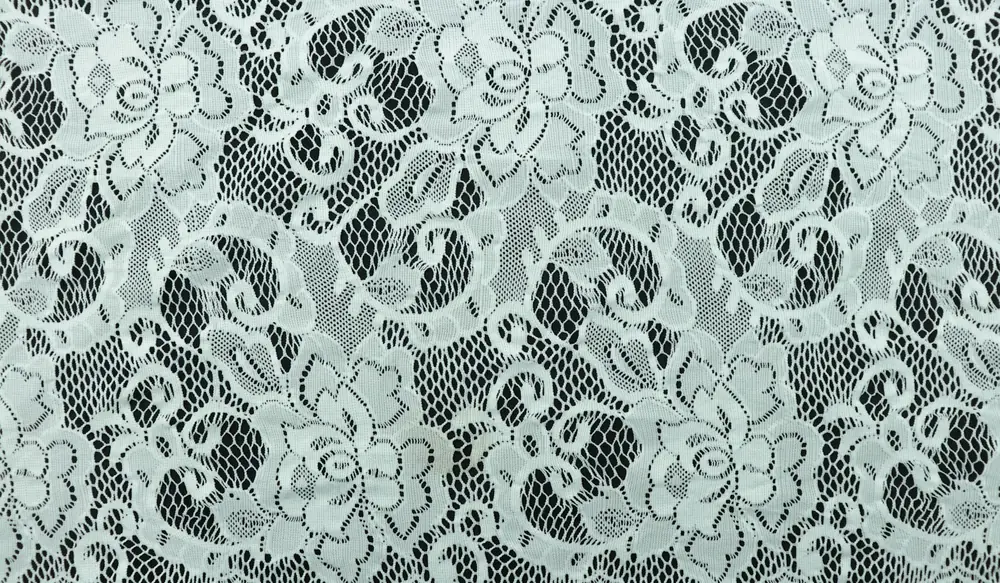
Anything partly transparent forces the render to decide what shows through it, and that decision has no correct answer available from a flat product photo. Lace over skin, a mesh panel over a lining, a chiffon overlay — the model is inferring the interaction rather than observing it.
The failure is usually one of two kinds: the fabric renders as opaque, losing the thing that made it worth photographing, or the transparency is applied inconsistently across the panel so the garment looks like two different materials.
Layering, and what it shares with the others
An open jacket over a top means resolving two garments and their boundary at once, and boundaries are where generated images are weakest. The same is true of a belt over a dress, a strap crossing a bodice, or a sleeve pushed up.
It is worth noticing that all four failures above are the same failure. Hands, type, sheer panels and layer boundaries are all places where the model must produce structure it cannot read off the input. Everywhere it can observe rather than infer — colour, print scale, drape of an opaque fabric — it is reliable.
- Observed — colour, print, trim, opaque drape: reliable
- Inferred — hands, typography, transparency, layer boundaries: check these
- The distinction predicts the defect better than any category list does
Fit accuracy is not a rendering problem
The last one is different in kind. A render shows a plausible garment on a chosen body; it does not know your grading, your ease, or the shopper's measurements. It cannot tell anyone whether a size 12 will fit them, and no improvement in image quality will change that.
This is the failure with real consequences, because it is the one that gets presented as a feature. Imagery that implies fit guidance sets up a return and an unhappy customer, where a wrong hand merely gets rejected in review. Sizing belongs in a size chart and in garment measurements, not in a picture.
Where this post stops applying
These are the failure modes as they stand today, on the kind of generative try-on this site is about. The list has got shorter over the last two years and will keep getting shorter — treat it as a checklist for review, not as a permanent property of the technology.
It is also written about production try-on, where a human sees every render before it publishes. Shopper-facing try-on has a different risk profile entirely: nobody reviews the output, so the same defects reach a customer directly rather than a reviewer.
- The specific failures move as models improve; the observed-versus-inferred distinction is the durable part
- Written for production use with human review, not for shopper-facing fitting rooms
- Category-specific quirks exist beyond this list — test your own hardest SKU
- Nothing here is a reason to skip reviewing output, which is the actual recommendation
Common questions
Is AI virtual try-on accurate enough for product listings?
For most garments, yes, with review. It is reliable where it can observe the garment — colour, print, trim, the drape of an opaque fabric — and unreliable where it has to invent structure, which is hands, printed type, sheer fabric and layer boundaries.
Why does AI get hands wrong so often?
Hands are small in frame, highly articulated and appear in a huge range of poses, so the model has less consistent structure to learn from than it does for faces. It is the most common visible defect and the one shoppers notice first.
Can AI try-on tell a shopper what size to buy?
No, and presenting it that way is the mistake with real consequences. A render shows a garment on a chosen body; it has no knowledge of your grading or the shopper's measurements. Sizing belongs in a size chart — see our conversion charts.
What should I check before publishing a batch of renders?
Hands and anything they touch, any printed logo or lettering, sheer or lace panels, and the boundaries between layered garments. Those four cover most of what review catches.
Does this mean I should not use AI product photos?
No — it means review them. The failure modes are specific and predictable, which makes them cheap to check for. Re-rendering a rejected image costs a credit; not checking costs a bad image on a product page.
More from the blog
Related
Reshoot a listing before the deadline
5 credits free at signup, no card. One product photo in, a seasonal on-model shot back in minutes.